About Kara
We started with the harp. It changed how we teach everything.
Kara began as a harp academy, in a country with almost no infrastructure for teaching the instrument. Building that infrastructure from the ground up shaped the whole academy.
Where we began
An instrument nobody had built a system for.
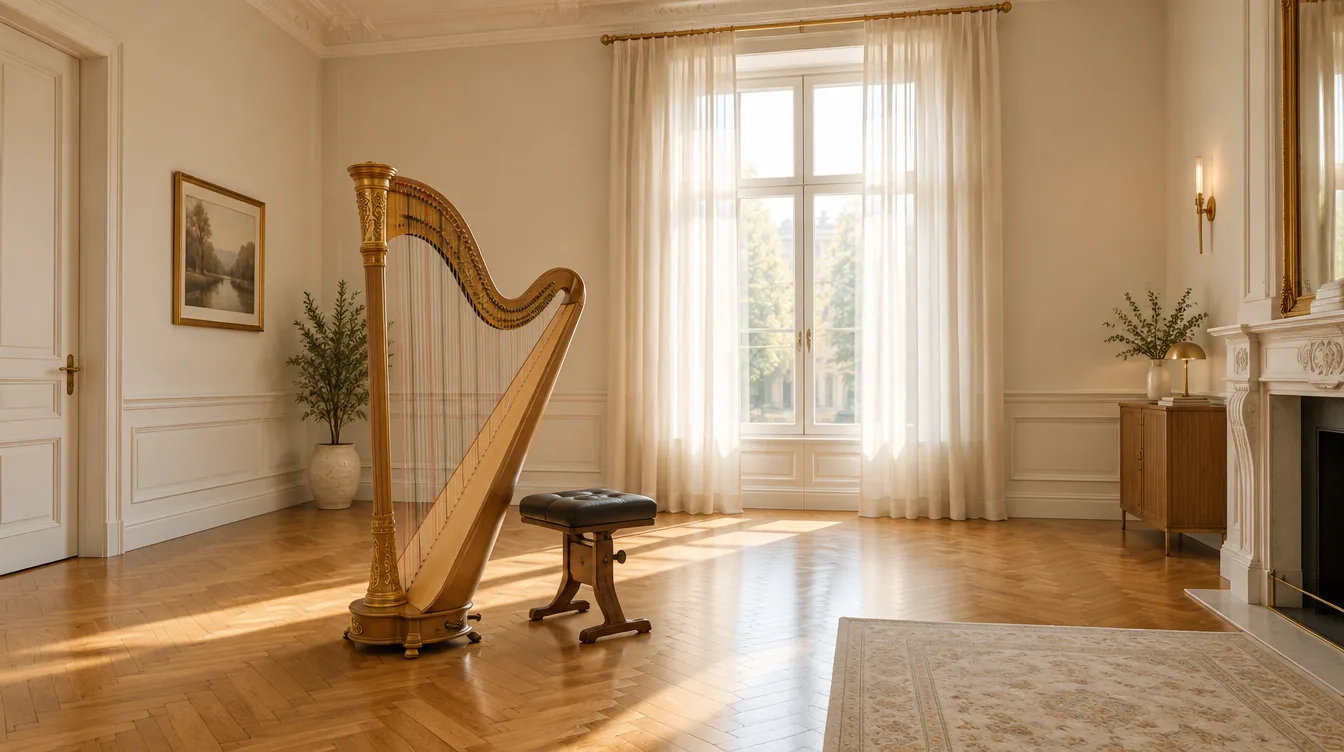
Kara began as a harp academy. The harp is one of the least taught instruments in Indonesia. Teachers were scarce, and the structures that other instruments take for granted were largely missing: trained teachers, a defined path from first lesson to advanced playing, and a way to record progress along it.
When the structure you need does not exist, you build it. We built the faculty, the curriculum and the instruments to teach the harp seriously. We developed teachers rather than only hiring them. We defined what progress on the harp looks like, and we wrote it down.
Then the academy grew. Piano, violin, cello, voice, drums and guitar joined the harp, and they inherited the same habits. That is why Kara operates the way it does. The starting point was never a timetable of rooms and lessons. It was the foundations.
What we have built
Three pieces of infrastructure, each one there because we needed it.
Plenty of schools describe their approach. These are the working systems behind ours.
A teacher career ladder
A formal ladder with class observation and structured induction. Teachers are developed deliberately, so your child's teacher is supported and held to a standard.
Semester student reports
Each semester your child's progress is written up in a report. You are not left to guess how things are going.
A student credential portfolio
A portfolio system that keeps a record of what each student has achieved, so their accomplishments are documented rather than remembered.
How we teach
Our teaching philosophy, in six plain statements.
Continuity beats intensity
Progress on an instrument comes from steady weekly work over months and years. That is why lessons sit on a fixed weekly slot, and why we ask for a three-month minimum at enrolment.
One teacher, one student
Every lesson is private. Thirty minutes belong entirely to your child, paced to them and not to a group.
Teachers who perform
Every teacher is a performing musician. Students learn from people who do what they are learning to do.
Progress on the record
If progress is not written down, it is hard to see. Semester reports and the credential portfolio make it visible to the child, the family and the teacher.
Honest placement
At the trial we tell you whether we think an instrument suits your child. We would rather match well than enrol quickly, and we confirm the placement in writing before anything is agreed.
Start young, properly
Early childhood music is a curriculum, not a play group. Poco a Poco, for ages 0 to 3, is built from established traditions and taught with the same care as everything else here.
Where we teach
Four ways to study with us
Surabaya West (Dian Istana, our main campus), Surabaya East (Dharmahusada), Jakarta (Pluit), and live one-to-one lessons online for students anywhere in Indonesia.
See how we teach, in one lesson.
A trial is the fastest way to judge a school. Bring your child, meet a teacher, and decide with something real to go on.